Ethiopia
Water supply for disadvantaged children and women

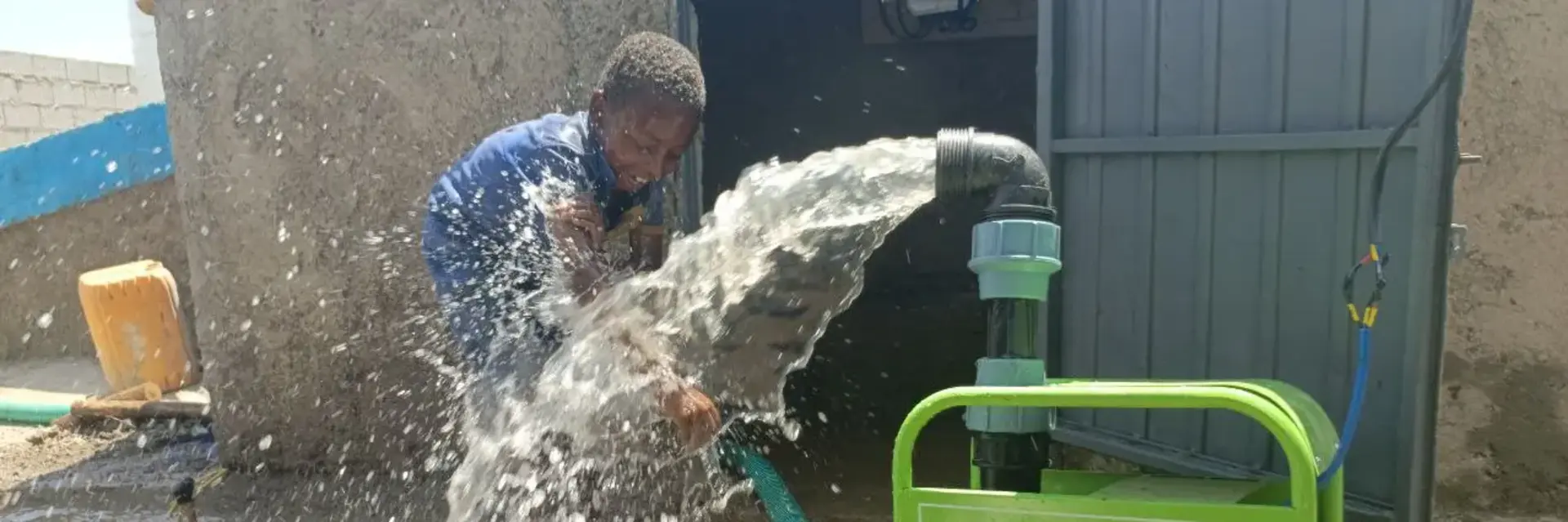
Ethiopia is particularly hard hit by climate change, as increasing droughts and erratic rainfall are threatening the water supply in many regions. The growing water shortage is causing entire regions to face food insecurity. The drought is putting agriculture at risk; crops fail to yield, leaving families without food, drinking water, and income. Households headed by women and their children are particularly hard hit. With the support of the German Postcode Lottery, we are expanding the local water supply to protect children and women from shortages and hunger.
Background
In Ethiopia, we have been working alongside local partners for many years to promote food security and environmental protection in the Siraro and Fentale regions, which have been severely affected by the impacts of climate change. Our focus is on improving the livelihoods and nutrition of rural women, as well as on the sustainable management of natural resources. By growing various types of vegetables and raising tree seedlings, the women—including single mothers—can improve their families’ nutrition thanks to the harvest. They can also sell surplus crops to earn a small income. By planting trees, we also prevent the landscapes from deteriorating and contribute to environmental protection. At the same time, the trees provide shade, and harvesting their fruit further supplements families’ diets with healthy food.
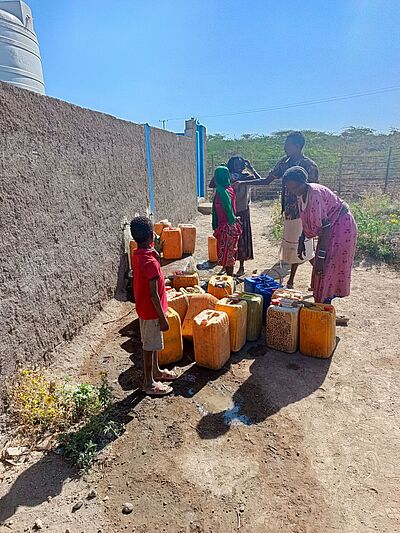
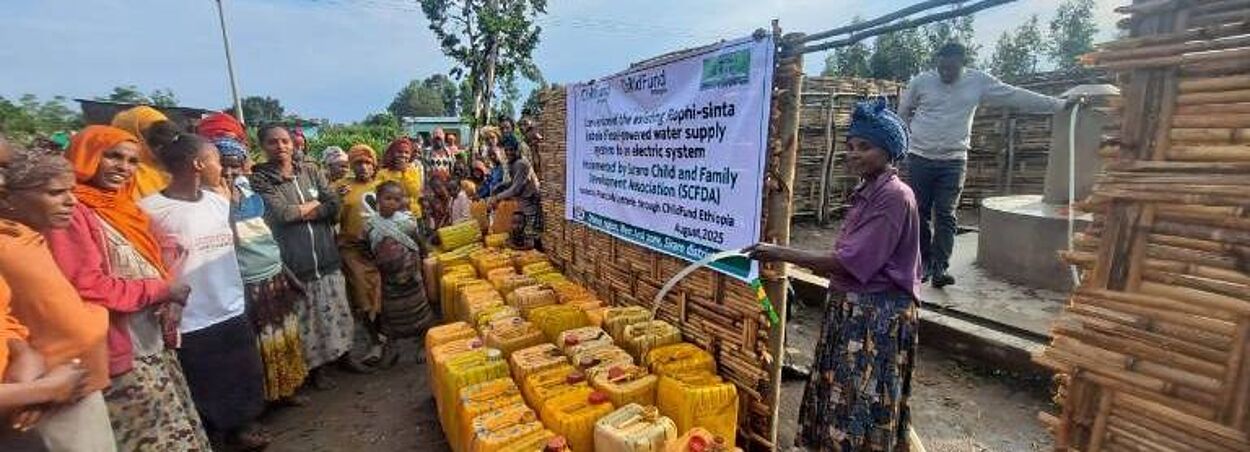
However, the increasingly noticeable effects of climate change present challenges for people: growing water scarcity in the villages is hampering agriculture. The lack of water also has a negative impact on the drinking water supply. To address this problem, we have constructed so-called rock ponds (covered cisterns) in several villages. These cisterns and the collection of water aid vegetable production and contribute to environmental protection. Furthermore, drinking water no longer needs to be fetched from distant rivers via dangerous routes, allowing children to attend school again.
However, without a pump, the water collected in the cisterns is difficult for women to access, making it hard for them to retrieve it, and it quickly becomes contaminated or partially spilled. To effectively counter the worsening water shortage and fully exploit the potential of the rock ponds, further expansion of the cisterns is needed.


Häufig gefragt
What does ChildFund Deutschland stand for, and what is the goal of its work?
Our goal is to bring about lasting improvements in the future prospects of children in need, their families, and their entire communities. Through our commitment to these children and families, we aim to make a positive difference and create lasting improvements, always guided by the principle of helping people help themselves. This enables them to exercise their rights, overcome poverty and dependency, and lead independent and self-determined lives.
How can I be sure that my donation actually reaches its destination?
The efficient use of the donations entrusted to us is our top priority. To ensure that our aid is used in a highly targeted manner, we rely on close collaboration with local partner organizations in all the countries where we operate, so that our assistance meets the specific needs on the ground. Furthermore, all our support is guided by the principle of helping people help themselves. This ensures that the people in our projects benefit from long-term and lasting changes and, in the long run, no longer depend on aid but can live independently and self-determinedly. Our transparent and responsible handling of donations is also confirmed by the DZI Donation Seal, which we have been awarded continuously since 1995 by the German Central Institute for Social Issues.
How does ChildFund Deutschland work?
Our work is made possible by three sources of funding: sponsorships, other donations, and public funds. Our projects funded by sponsorships are designed for the long term. They are characterized by particularly close collaboration between our partner organizations in the respective project country and the local communities.
The donation-based and publicly funded projects have a shorter duration. Due to the limited timeframe, these projects require more intensive planning and support on our part.
In all projects, ChildFund plays two specific roles: First, raising funds so that the project work can be implemented at all. And second, bringing together and building bridges between those who provide money and expertise and those who lack these resources. The goal is to maximize mutual benefit from the collaboration and to advance our projects in the most effective way possible.
What kinds of projects does ChildFund Deutschland carry out?
Our projects, which are funded through sponsorships, are designed for the long term. They are characterized by particularly close collaboration between our partner organizations in the respective project country and the local communities.
The donation-based and publicly funded projects have a shorter duration. Due to the limited timeframe, these projects require more intensive planning and support on our part.
What regions and issues does ChildFund Deutschland focus on?
We operate in various countries across Asia, Africa, Latin America, and Eastern Europe. Our work focuses primarily on education, nutrition, livelihood support, and child protection, as well as humanitarian aid in emergency situations. Issues such as health and climate protection are also central to many of our projects.
How can I support ChildFund Deutschland?
There are many different ways to support our work. From a one-time donation to a regular donation as a “Future Donor” to becoming a sponsor, you are free to choose the form of support that best suits you. Long-term and particularly sustainable support can also take the form of a foundation or a bequest. We also offer a range of customized support options for businesses and schools.