Senegal
Support for Girls and Women Regarding Menstruation and Hygiene


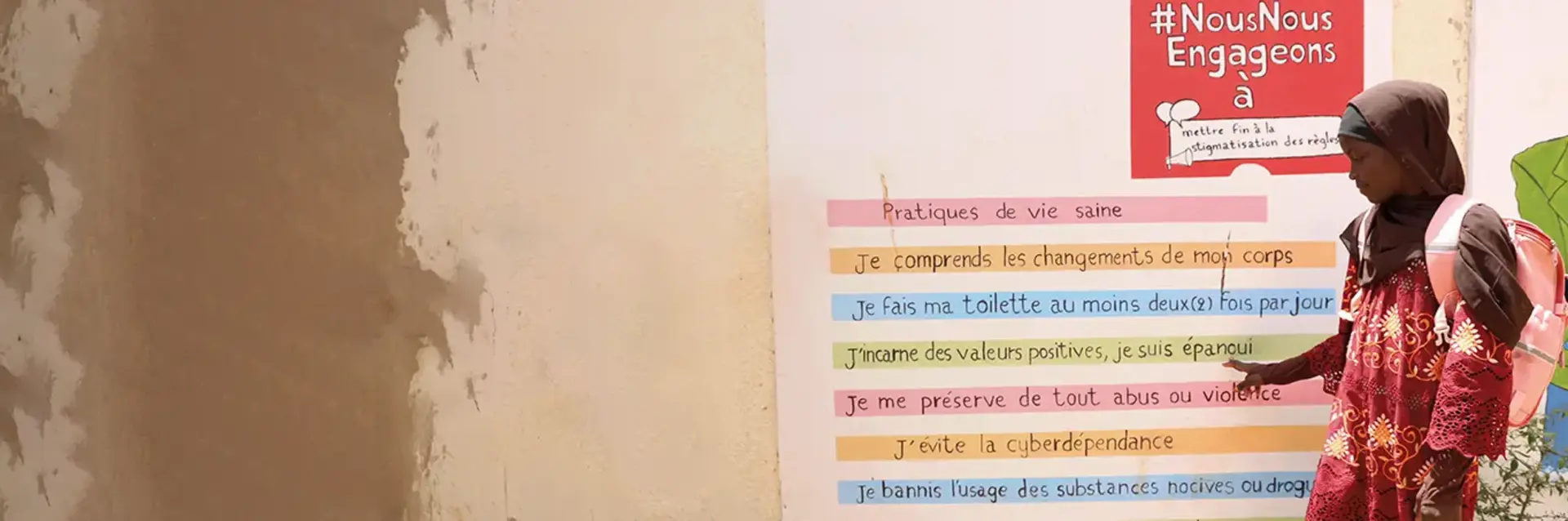
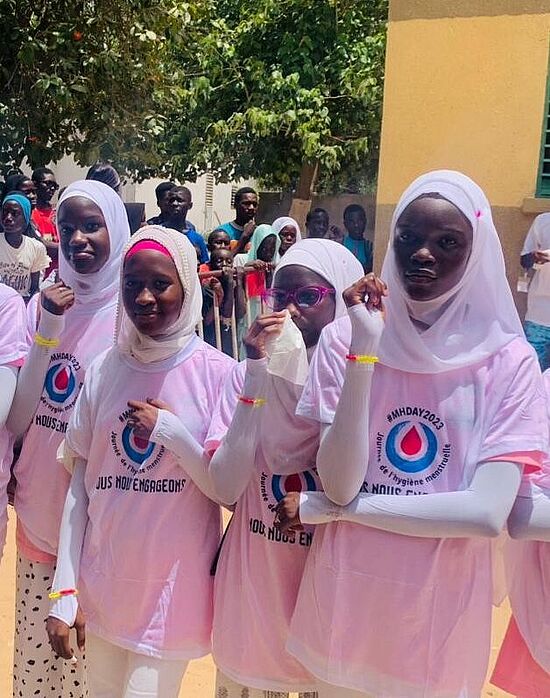
Inadequate education on reproductive health, a lack of knowledge about menstrual hygiene, insufficient infrastructure, limited access to hygiene products and medical care, as well as cultural taboos, mean that the rights to health and education for girls and young women in Senegal are not adequately safeguarded. They face particular health risks and often do not attend school during their periods. As a result, they are temporarily unable to participate in daily life and experience discrimination and exclusion.
Background
Every month in Senegal, many girls and young women stay home for several days because they are menstruating. There is a lack of clean, gender-segregated toilets with running water and a waste disposal system. Many girls know very little about their bodies, menstruation, and reproductive health, and cannot afford sanitary products. The fact that menstruation is still a taboo subject in many places makes it even harder for them to get support.
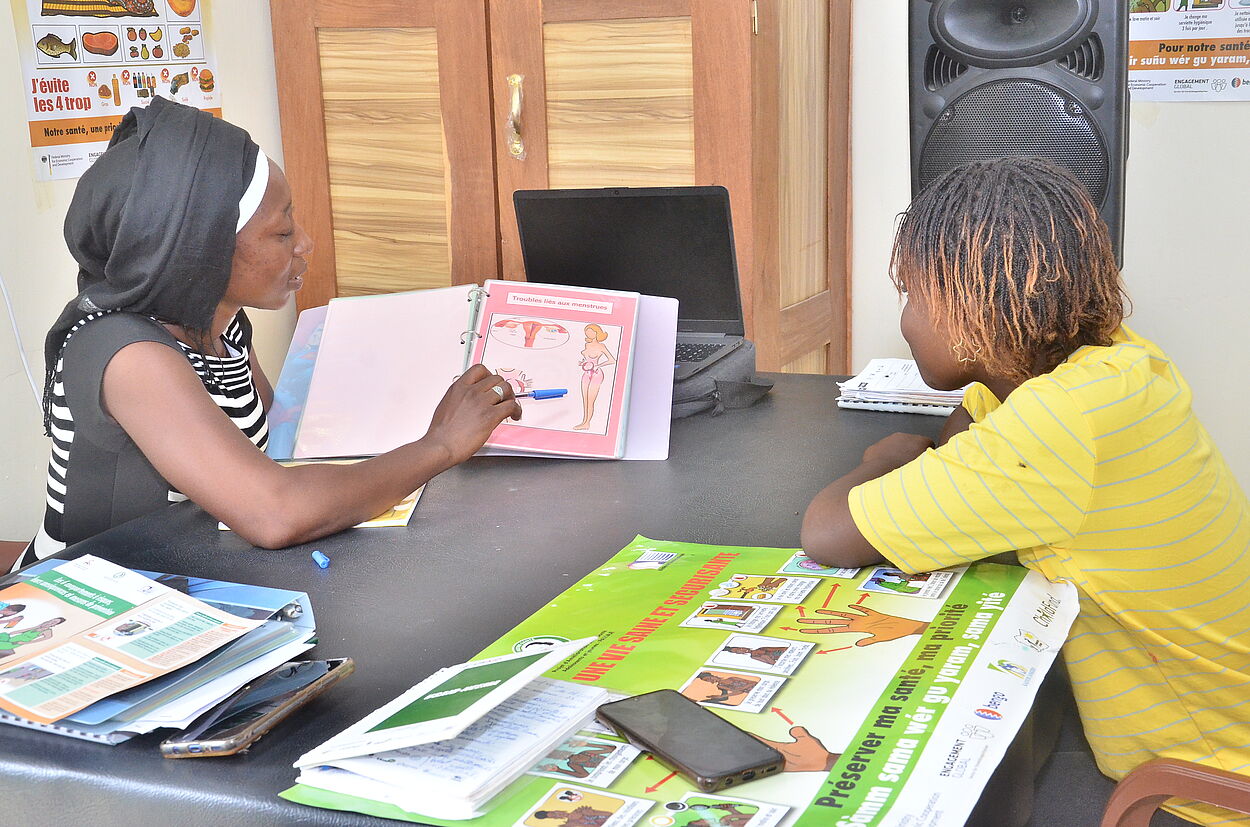
Limited access to media, the lack of available information, and the scarcity of counseling services in the area of sexual and reproductive health exacerbate the situation. The lack of education increases the risk to adolescent girls of early or unwanted pregnancies, sexually transmitted diseases, and unsafe abortions. Local health facilities, such as school health clinics, are often nonexistent or poorly equipped and barely functional.
The difficult conditions, lack of hygiene supplies, and uncertainty have devastating consequences. Many girls and young women are afraid and feel uncomfortable. In some cases, their parents also refuse to let them attend school during menstruation. The girls regularly miss classes or even drop out of school entirely, cutting them off from social life. This traps them in a downward spiral of disadvantage, dependency, and stigmatization.

Frequently asked
What is ChildFund Deutschland and what does the organisation do?
ChildFund Deutschland is a child protection organisation whose aim is to bring about lasting improvements in the future prospects of children in need, their families and their wider communities. Through its work, it seeks to make a positive difference to the lives of these children and families and to bring about lasting improvements.
How can I be sure that my donation actually reaches its destination?
The efficient use of the donations entrusted to us is our top priority. To ensure that our aid is used in a highly targeted manner, we rely on close collaboration with local partner organizations in all the countries where we operate, so that our assistance meets the specific needs on the ground. Furthermore, all our support is guided by the principle of helping people help themselves. This ensures that the people in our projects benefit from long-term and lasting changes and, in the long run, no longer depend on aid but can live independently and self-determinedly. Our transparent and responsible handling of donations is also confirmed by the DZI Donation Seal, which we have been awarded continuously since 1995 by the German Central Institute for Social Issues.
How does ChildFund Deutschland work?
Our work is made possible by three sources of funding: sponsorships, other donations, and public funds. Our projects funded by sponsorships are designed for the long term. They are characterized by particularly close collaboration between our partner organizations in the respective project country and the local communities.
The donation-based and publicly funded projects have a shorter duration. Due to the limited timeframe, these projects require more intensive planning and support on our part.
In all projects, ChildFund plays two specific roles: First, raising funds so that the project work can be implemented at all. And second, bringing together and building bridges between those who provide money and expertise and those who lack these resources. The goal is to maximize mutual benefit from the collaboration and to advance our projects in the most effective way possible.
What kinds of projects does ChildFund Deutschland carry out?
Our projects, which are funded through sponsorships, are designed for the long term. They are characterized by particularly close collaboration between our partner organizations in the respective project country and the local communities.
The donation-based and publicly funded projects have a shorter duration. Due to the limited timeframe, these projects require more intensive planning and support on our part.
What regions and issues does ChildFund Deutschland focus on?
We operate in various countries across Asia, Africa, Latin America, and Eastern Europe. Our work focuses primarily on education, nutrition, livelihood support, and child protection, as well as humanitarian aid in emergency situations. Issues such as health and climate protection are also central to many of our projects.
How can I support ChildFund Deutschland?
There are many different ways to support our work. From a one-time donation to a regular donation as a “Future Donor” to becoming a sponsor, you are free to choose the form of support that best suits you. Long-term and particularly sustainable support can also take the form of a foundation or a bequest. We also offer a range of customized support options for businesses and schools.