Ukraine
Improving standards in school cafeterias


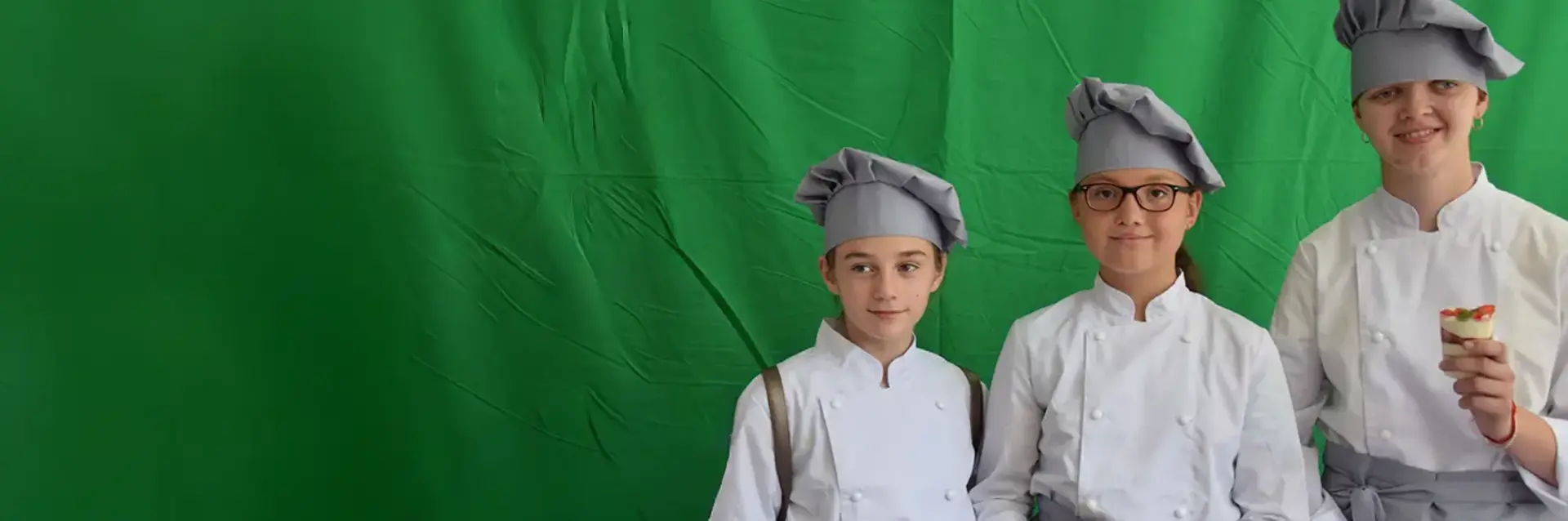
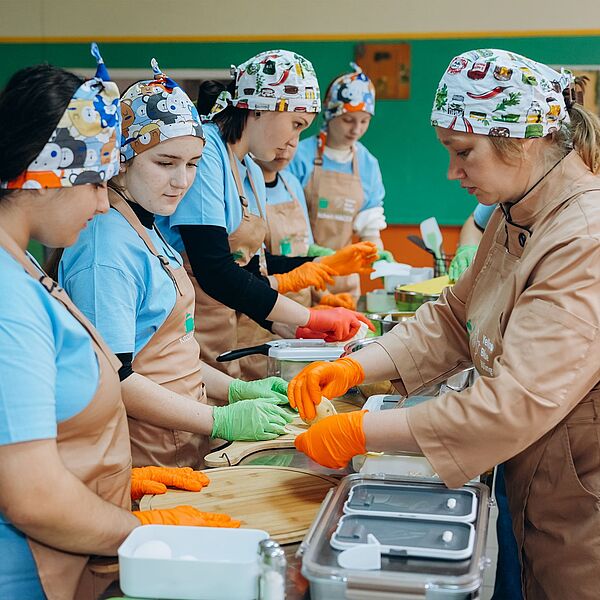
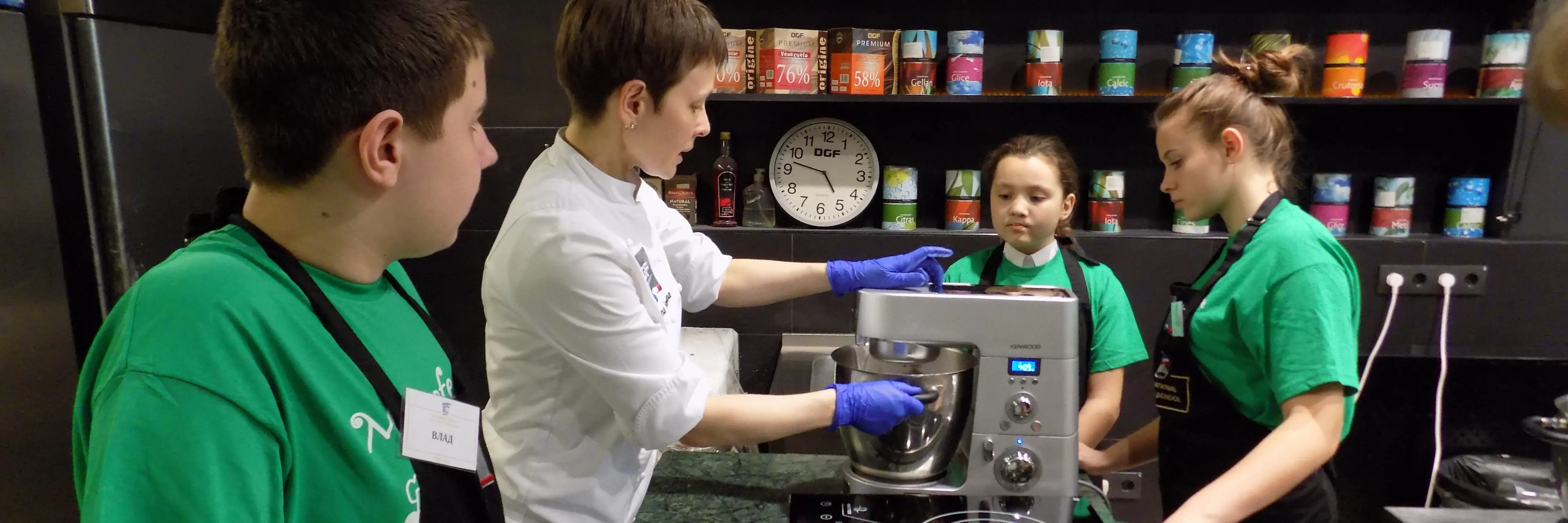
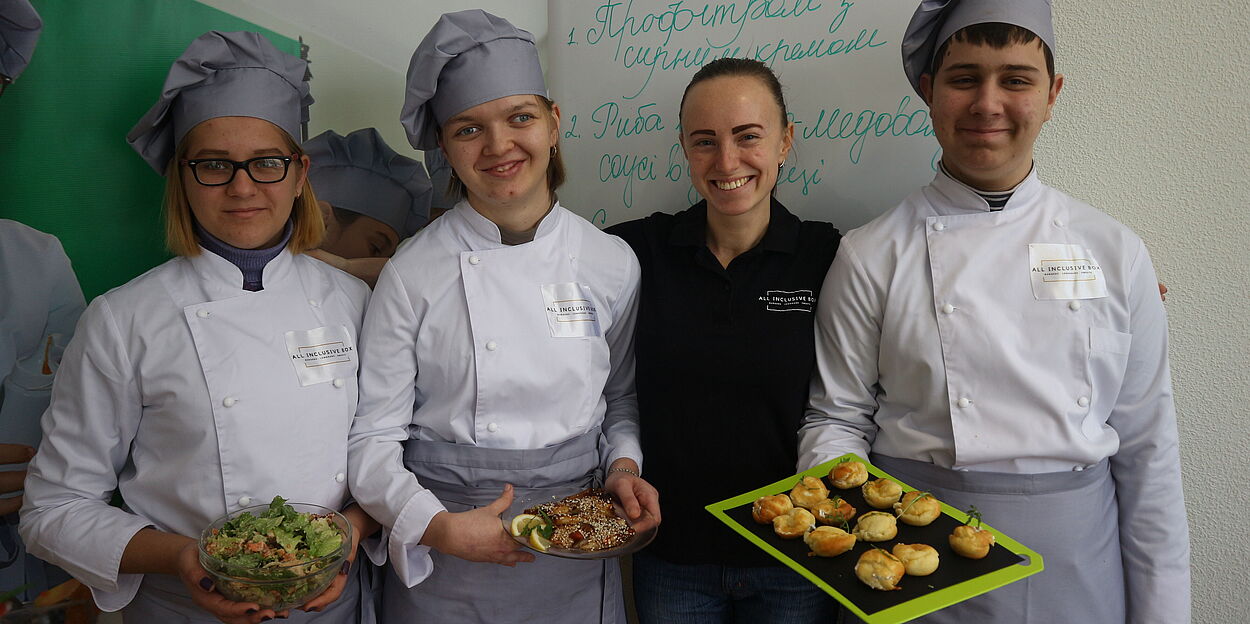
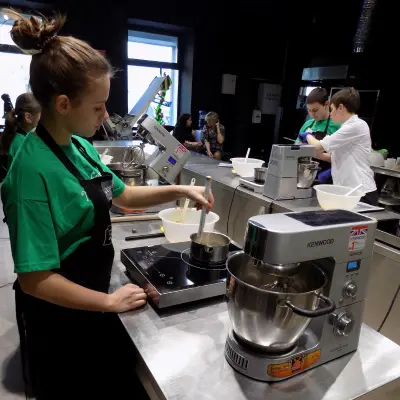
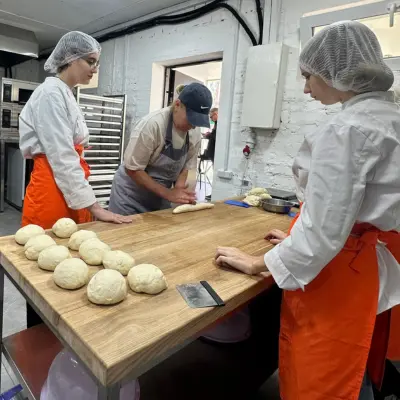
In 2020, Ukraine adopted a food reform aimed at improving the quality of meals in school cafeterias. In the past, many cafeterias had unbalanced menus and lacked proper hygiene measures. By renovating and modernizing cafeterias in 18 schools and 2 children’s homes, as well as training kitchen staff, we are working to ensure that over 9,000 schoolchildren once again have access to healthy meals at their schools.
Background
For a long time, the school meal system in Ukrainian schools was severely outdated. An unbalanced diet and simple, uninspired lunches meant that many children were lacking essential nutrients, and obesity among schoolchildren was on the rise. Yet a healthy and balanced diet is essential for a child’s health and development. Due to improper, often unsanitary handling of food in school cafeterias, cases of food poisoning and illness among children were also regularly reported.
In 2020, under the patronage of First Lady Olena Zelenska, the government therefore introduced a food reform known as the Hazard Analysis and Critical Control Points (HACCP) system—an approach to hygiene management in the food sector that prioritizes quality assurance and risk analysis. In October 2023, a national strategy for school nutrition was also adopted for the coming years. The goal is to provide diverse, healthy, and high-quality meals in school cafeterias and to promote healthy eating habits in everyday school life.
However, there are significant challenges and major problems in implementing this strategy, which jeopardize healthy nutrition for students in cafeterias: for example, food deliveries are canceled or substandard food is delivered. There is a lack of proper equipment, qualified cafeteria staff, and training and continuing education programs for aspiring chefs. Furthermore, there is a lack of public awareness regarding the connection between nutrition and health.
Ultimately, due to Ukraine’s current economic situation, there is a lack of financial resources for the complete modernization of cafeterias and the improvement of training opportunities, meaning that compliance with HACCP standards cannot be guaranteed in many childcare facilities. We are countering this through our commitment, thereby ensuring the social protection of children in a sustainable manner.


Frequently asked
What is ChildFund Deutschland and what does the organisation do?
ChildFund Deutschland is a child protection organisation whose aim is to bring about lasting improvements in the future prospects of children in need, their families and their wider communities. Through its work, it seeks to make a positive difference to the lives of these children and families and to bring about lasting improvements.
How can I be sure that my donation actually reaches its destination?
The efficient use of the donations entrusted to us is our top priority. To ensure that our aid is used in a highly targeted manner, we rely on close collaboration with local partner organizations in all the countries where we operate, so that our assistance meets the specific needs on the ground. Furthermore, all our support is guided by the principle of helping people help themselves. This ensures that the people in our projects benefit from long-term and lasting changes and, in the long run, no longer depend on aid but can live independently and self-determinedly. Our transparent and responsible handling of donations is also confirmed by the DZI Donation Seal, which we have been awarded continuously since 1995 by the German Central Institute for Social Issues.
How does ChildFund Deutschland work?
Our work is made possible by three sources of funding: sponsorships, other donations, and public funds. Our projects funded by sponsorships are designed for the long term. They are characterized by particularly close collaboration between our partner organizations in the respective project country and the local communities.
The donation-based and publicly funded projects have a shorter duration. Due to the limited timeframe, these projects require more intensive planning and support on our part.
In all projects, ChildFund plays two specific roles: First, raising funds so that the project work can be implemented at all. And second, bringing together and building bridges between those who provide money and expertise and those who lack these resources. The goal is to maximize mutual benefit from the collaboration and to advance our projects in the most effective way possible.
What kinds of projects does ChildFund Deutschland carry out?
Our projects, which are funded through sponsorships, are designed for the long term. They are characterized by particularly close collaboration between our partner organizations in the respective project country and the local communities.
The donation-based and publicly funded projects have a shorter duration. Due to the limited timeframe, these projects require more intensive planning and support on our part.
What regions and issues does ChildFund Deutschland focus on?
We operate in various countries across Asia, Africa, Latin America, and Eastern Europe. Our work focuses primarily on education, nutrition, livelihood support, and child protection, as well as humanitarian aid in emergency situations. Issues such as health and climate protection are also central to many of our projects.
How can I support ChildFund Deutschland?
There are many different ways to support our work. From a one-time donation to a regular donation as a “Future Donor” to becoming a sponsor, you are free to choose the form of support that best suits you. Long-term and particularly sustainable support can also take the form of a foundation or a bequest. We also offer a range of customized support options for businesses and schools.